Siblings: The Forgotten Ones
How Siblings Get Hurt
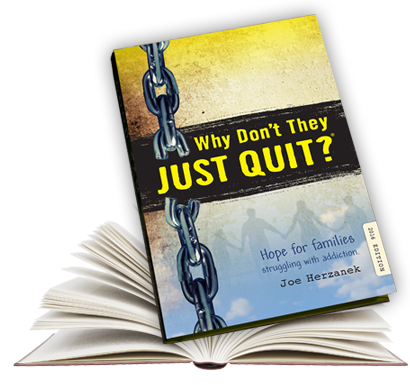
This article is an excerpt from the book Why Don’t They Just Quit? Hope for families struggling with addiction (pg. 79).
“I was blind to how my actions were affecting my brother and two sisters.”
The Parable of the Prodigal Son
While he was still a long way off,
his father saw him coming.
Filled with compassion,
the father ran to his son,
threw his arms around him, and said,
“Welcome home.”
His son had come to his senses.
Let's have a party!
His brother refused to come to the party, even after his father pleaded with him
to join them.
“I've stayed here all these years
and never caused a problem.
No one ever had a party for me,”
said the brother.
—paraphrased from the Gospel of Luke

Siblings often find themselves caught in the middle of the recovery process. In the story of the prodigal son, a father waits and watches expectantly for his wayward child's return. The boy left home, squandered his inheritance, and wasted a big chunk of his life. But there is so much more to the story. As we take a closer look at the entire family, we see that “the rest of the story” applies to families and siblings today who are struggling with the early stages of recovery.
“If we could sell our experiences for what they cost us, we’d all be millionaires.”
I know firsthand how siblings can suffer. During my addiction, I was blind to how my actions were affecting my brother and two sisters. In fact, the entire family did not understand what was happening. Even now, more than thirty years later, some members of my family remain bitter, and we have never been able to resolve those hard feelings.
There is only so much time in any given day, and when there is one high-maintenance family member, the other children are often neglected. Parents have a limited amount of energy each day, and they eventually reach exhaustion. In my case, which again is not unique, I received more than my share of attention. Like many other addicts, I was a very needy person. My life was one crisis after another. There were many occasions when I needed money. I drained my parents of their finances, time, and energy. Who suffered? At the time, it was far from obvious, but as I look back, it’s clear that my brother and sisters were basically good, low-maintenance kids who were the innocent victims.
Mom and Dad spent much of their parenting energy either helping me with a problem or worrying about what I might do next; they were even afraid to answer the phone. They couldn't be in two places at once, physically or mentally. As a result, my siblings did not receive nearly the attention they deserved. My parents missed their school programs and sports games because of my problems, and holidays were often ruined. Much of the focus was on Joe, and I was messing up my life while my brother and sisters were left striving to do the right thing and to gain my parents' approval and attention.
To make matters worse, my parents’ attention remained focused on me for a long time during my recovery. My siblings had to hear over and over, “Isn't it great that Joe’s quit using drugs? How wonderful that Joe is clean and sober. Joe has been drug-free for a year now. “Let's celebrate!’” These comments continued even after everything should have been back to normal. Talk about rubbing psychological salt in a wound; my brother and sisters must have been ready to puke. At that time, none of us had a clue how this would ultimately affect our future relationships.
“The years teach much which the days never knew.”
Insidious: working or spreading harmfully in a subtle or stealthy manner. Awaiting a chance to entrap; treacherous. Harmful yet enticing. Developing so gradually as to be well established before becoming apparent. (Webster's Dictionary)
It was only after years of recovery and study on this topic that this realization came to me. Because of the disease's slow progression, few families are aware of the effects addiction has on the family. Few addicts consider making amends to those who did not appear to be directly affected.
When I entered treatment many years ago, there was little emphasis on the role of family in the recovery process. Today, family involvement is a key component of most treatment programs. Parents and siblings are strongly encouraged to participate. Some centers even offer what is called Family Week. This is a time for those who have been negatively affected to become involved in the recovery process. Many times, family members will refuse to get involved: “He/she had the problem, not me. And now you are asking me to get counseling? You must be crazy.” Nonetheless, I strongly suggest that family members attend some meetings — if for no other reason than to vent their frustration. It will be worth it. “Time has yet to heal
some of the wounds in my family.”
Addiction is treacherous for the whole family. Over time, relationships can become a tangled web. Feelings get hurt, and bitterness creeps in, almost unnoticed. Strife builds, and after a while, no one remembers why. But life is too short to waste years like this. Miracles can happen when a professional helps untangle the mess.
Time has yet to heal some of the wounds in my family. The impact of my addiction and recovery has left deep scars and damaged relationships within my immediate family, and we are still trying to understand and mend them. Despite our attempts to keep things simple, life can sometimes become very complicated. Over the years, my siblings have married. Bitterness and unresolved strife have colored relationships not only among my siblings but also among our spouses and children. Recovery and the process of making amends to those who were hurt take time. Sometimes these differences may never be resolved.
Quitting, as wonderful as that may be, is not the same as recovering. Recovery means taking responsibility for the broken relationships that resulted from the addict’s use. Repairing those relationships is critical to the recovery process. With patience and time, progress can be made.