Dan’s Story
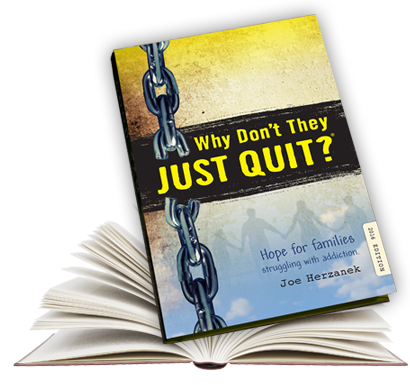
This article is an excerpt from the book Why Don’t They Just Quit? Hope for families struggling with addiction. (pg. 297)

It is difficult to think back to my son Daniel’s story and his addiction. It is hard to relive the pain of that time in my life. I do so to remember the lessons I have learned more clearly and perhaps to help someone else who may be facing this destructive disease.
Although Dan’s father and I divorced when Dan was 7, it was in Dan's early middle school years that my family began Dan’s painful path of use. Perhaps Dan’s use began because there was more friction between his parents, because his best friend moved away in 6th grade, or because, in 6 months, Dan went from a little boy to looking like an 18-year-old. It really doesn’t matter how it began. The truth is, Dan used because he is an addict.
My relationship with my son was very strong and loving throughout his early years, so when tension and fighting began, it seemed normal. It was important that he “break” from his strong ties to his mom to find his identity as a young man. I still think that was a reasonable explanation at first, but I held on to it long after I knew in my heart it was more than that.
My son was an athlete who excelled in all team sports. He had gone through puberty early, which gave him an advantage in size and coordination. He was unassuming and coachable, and his teams were successful. His teammates looked up to him. For whatever reason, he was drawn to the wrong crowd. He said kids his age were boring, and because he looked older, he gravitated toward older kids.
In eighth grade, his behavior was erratic. He would get angry in a split second over little things and started punching walls and breaking chairs. He would come home late, and sometimes when I went to get him, he wouldn’t get in the car. He got into some minor trouble at school, but at the end of his eighth-grade summer, he and a friend stole a car. He went through the diversion program and participated in a restorative justice program. It seemed he truly understood that he needed to change his ways, and he begged me to let him know if I had any misgivings about anyone he brought home as a friend.
Dan’s first year of high school was marked by many successes in academics and sports. Socially, he still had friends his age, but the older crowd was becoming more of a part of his life. Toward the end of his freshman year, something changed, and he started shutting me out of his life again. At the time, I knew it was a red flag, but I could not convince his dad or his counselor that he was using.
Sophomore year was difficult. Dan would not speak to me, lived full-time with his dad, and was spiraling downward. He was in therapy off and on with someone who was highly respected in the community and credible as an adolescent counselor. I kept insisting that Dan’s behavior indicated substance abuse, but no one agreed. In February, Dan came to my house after school, drunk, with marks on his arms from hurting himself. He said he wanted to die.
I called the police. Dan went to the ER and was then released to a psychiatric hospital. When he was to be dismissed, he said he would not do any outpatient care, and his therapist recommended a wilderness program. I knew I couldn’t watch him 24-7, and I knew that was what he needed. He was there for two and a half months, which gave me some hope and some sleep, but the program did not emphasize the disease of addiction. Dan had no 12-step skills and no understanding of his disease. The first weekend home, he went to a party and came home totally smashed.
I don’t remember the specifics of junior year. It was a fog of sleepless nights and days, of not knowing where he was, what he was doing, or who he was with. Dan’s dad was still in denial and refused to address the substance use issues. Most high school kids drink and get in trouble, right? “This is just normal high school stuff” was the response I would get from so many people. I knew it wasn’t; I knew Dan was one of those people who could not drink alcohol. I heard rumors about the people he was friends with and some of the criminal things they were doing. I was torn about what to do. I consulted many therapists and was told there was nothing I could do. I called the police, a parole officer whose son struggled with the same issues, and friends. It was the most frustrating, helpless, and depressing time of my life.
I would wake in the middle of the night in panic. Was my son dead somewhere? Was he lying passed out in the freezing cold? If I did something now, would I save his life? I would call his phone, not expecting him to pick up, but believing it might wake him and keep him from dying. It was the most stressful and hopeless time of Dan’s addiction for me. He ended up in the psychiatric hospital in February. Again, I asked the professionals if this could be a result of his use, and they said maybe, but they were looking at mental illness diagnoses.
In the summer after his junior year, my family experienced a tragedy. My oldest daughter’s husband was killed by an impaired driver. It devastated the whole family and became a turning point for Dan and me. Dan, of course, escalated his use. He started using hard drugs and dropped out of school. I had to turn my attention to my daughter and granddaughter. It forced me to “let go” of Dan’s use and abuse issues and give them to him to figure out. I still prayed that he would live and choose to live clean and sober, but I stopped trying to make it happen. My response shifted from “You have to stop doing this to yourself, or you will die,” to “I pray that you choose to live life clean and sober and let me know what I can do to help you.” I was consumed with grief over the loss of my son-in-law and with the need to help my daughter as a single parent. I had to prioritize my energy, given a full-time job, my 27-year-old widowed daughter, my fatherless granddaughter, my 15-year-old daughter, and my son, who was using. I just didn’t have the energy to keep worrying about him the way I had been. I had to “let it go” and trust that he would figure it out.
Dan expressed survivor’s guilt after his brother-in-law was killed. He was the one who messed up, the one who caused so much pain to the family, and the one who deserved to die. He ended up in jail the summer after what should have been his high school graduation. He had stolen a car again and was writing checks on his dad’s account. When he got out of jail, he came to live with me, making promises not to use and to follow the terms of his probation. After a few months, his use escalated to shooting heroin, and he attended a 30-day program in December. His sisters and I came for family week to support him in his recovery. We wanted to show him we cared, but we were also resentful that he was asking more of us. We hoped for the best for him this time, but we still saw signs he didn’t take full responsibility.
Most importantly, I clarified my boundaries and committed to holding them. If I suspected he was high, I would not ask him to confirm or deny it; I would ask him to leave. He could not live in my house if he were using. I learned to trust my intuition about whether he was, and I did not need someone else to agree with me. I had the confidence to know my son and his behavior well enough to tell when he was clean and when he was not. I also realized that there was nothing I could have done to keep my son-in-law from being killed, and nothing I could have done to keep my son alive if he was determined to die.
A few weeks after he “graduated” from rehab, he started using again. I told him I loved him and that he was not following the rules we had set. He needed to leave. When I came home from work, I would find he had entered the house through various windows. He had done that before, and I had put up a sign that said, “If you come in here, I will call the police,” and he stopped. This time, though, he was coming in to steal from me. He stole gold jewelry, tools, and musical instruments. I went to pawn shops in town and tracked down some of the items, getting the names of the young men who had pawned them for Dan. With this information, I filed a police report. Although it was difficult, I was certain my son was begging me to do something drastic. He was out of control and could not stop himself. I was going to help him by keeping my boundaries.
The next time I spoke with Dan, I gave him a choice. He could admit himself to a detox unit and commit to staying clean and sober, or I would file charges against him for theft. He chose detox. He worked with his probation officer to explore living situations after he detoxed, but one required a yearlong commitment, and another was not an option because Dan was on probation. Joe coached me through this difficult time. I had read Joe’s book and knew I needed someone to help me be clear about my boundaries and the consequences.
When my son got out after 3 days of detox, he got high. I told him to leave again. Joe had told me to tell Dan to come back after 90 days of being clean. I told Dan that. Dan left the house, and I broke down in tears. The next day, I called one of the counselors at the detox and said I had kicked Dan out because he used. The counselor said good. I needed that support. I called Joe and asked if I should file charges, as I had said I would. Joe reminded me that my son would not die of an overdose in jail. I needed that reminder. I needed the support of these recovery experts to accomplish what I set out to do.
The next morning, I went into the garage to let the dog out before heading to work.
My son was asleep there, huddled next to the dog. It was one of the most heartbreaking sights I had ever seen. How could it have come to this? My once sweet, loving boy, now a heroin addict, living like a dog?
Again, I told him I loved him, and we had agreed that if he used, I would file charges. I told him I would file charges after work. That afternoon, I got a call from Dan’s probation officer, who said Dan had come by and asked her to do something for him. He needed help. She called a Christian sober living home, and Dan could come live there, but he needed to make a one-year commitment. Dan agreed. I did not file charges that afternoon, but there is no doubt in my mind that I would have. And I think there was no doubt in Dan’s mind that I would have.
The relief I felt over the next few weeks was unbelievable. I woke up in the morning after a full night’s sleep, resting with the assurance that my son was in a safe, healthy place. The surrender that began when I turned over my son’s addiction to him ended in complete surrender to relief. I couldn’t talk with him during the first month he was there, and I was glad of that. I knew I could get hooked back in, and I knew it would not be good for any of us.
I went to see him after about 4 weeks, and he looked better than he had in the past year. My son looked like himself, spoke to me with love and gentleness, and wanted to stay where he was and remain clean.
That was seven months ago, and our relationship continues to grow. I learned the hard way that he was not trustworthy, and I’m not sure how long it will take me to believe what he says. I have always believed IN him, and I still do. The lying, deceit, and stealing destroyed the foundation of our relationship. That is a reality of the life of a using addict. I imagine it will take as many years to rebuild my trust as he took to destroy it.
When I look back, it’s hard to say whether I did the right thing all those years. I have come to believe that life is a process and that I can only know what I know when I know it. I am grateful that Dan is where he is now, and I relish each day of his sobriety. I pray that he chooses life each day rather than the death that comes with using. Recovery is a marathon, and he is in the first mile. I am clear that my role is to support, not enable, to set clear boundaries, and to love him. Everything else is up to him.
I am grateful today not for the pain of the last few years of my life, but for the lessons I have learned from dealing with it. Those lessons include trusting my intuition, setting and maintaining clear boundaries with love and kindness, accepting what is, and trusting the judgment of people like Joe.